Twelve months chasing mastery
A year spent discovering that mastery is much less glamorous than it looks.
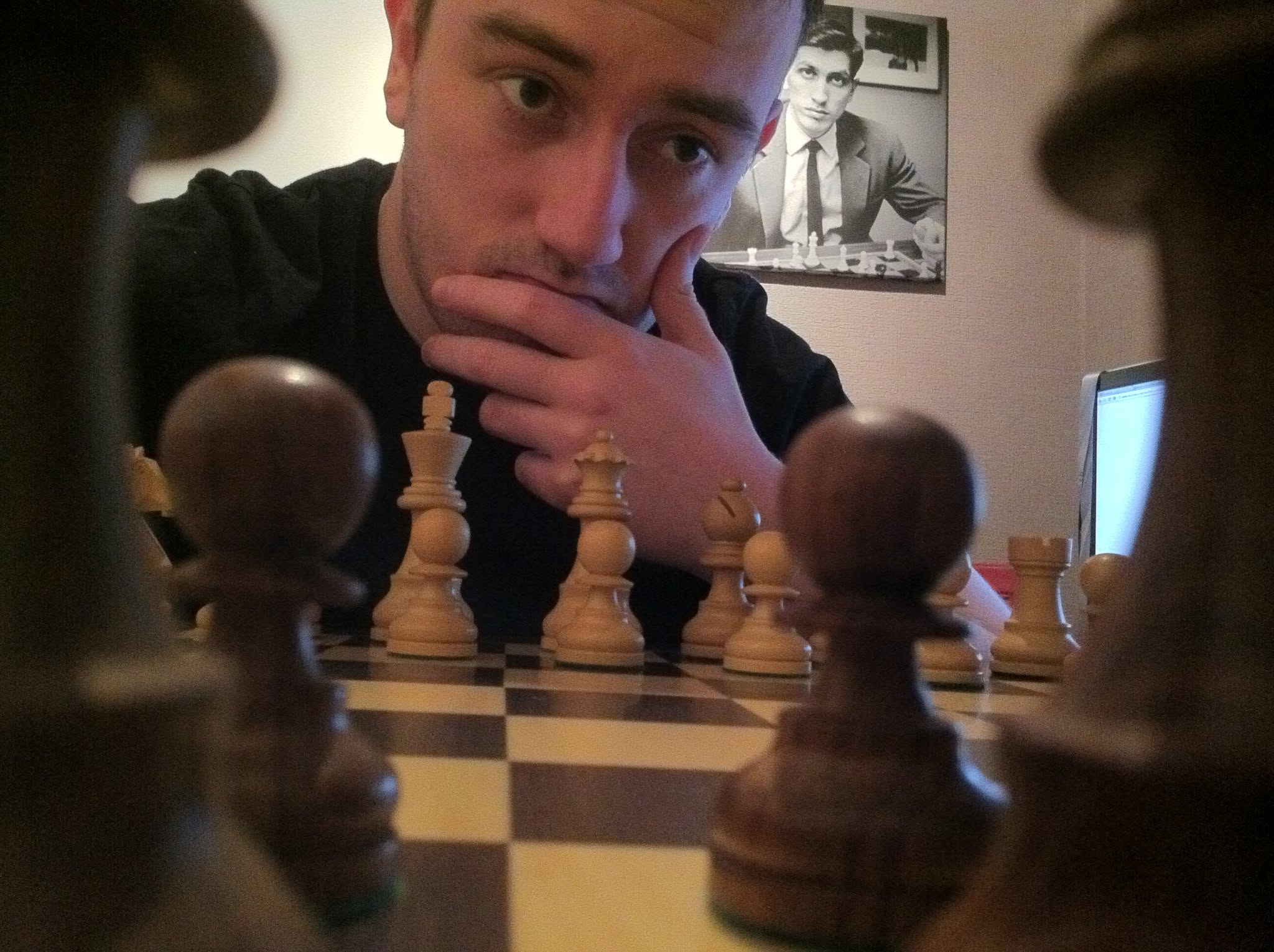
Most CVs flatten the interesting parts of a life into a single line. Mine has one that reliably starts a conversation.
Professional Chess Player (2011-2012)
It sounds far more glamorous than it was. There were no sponsorship deals, no television cameras, no grandmaster norm waiting in the post, and at no point did anyone invite me to sit across the board from Magnus Carlsen. Mostly there were airports, budget hotels, industrial quantities of coffee, and long hours spent staring at positions that looked, to anyone who wasn't a chess player, completely identical to one another.
It remains one of the best decisions I have ever made.
Walking away
In 2011 I did something that felt entirely reasonable to me and faintly alarming to everyone else; I stopped working in technology. Not for good. Just long enough to find out how far I could push the chess.
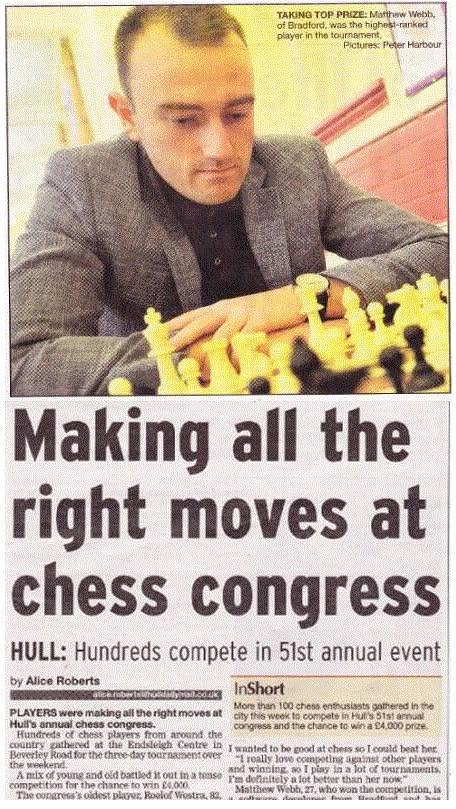
At the time I was chasing the next milestone and trying to discover how strong I could become if chess stopped being something I fitted around life and became the thing life was organised around. I wasn't under any illusion that a world championship title was waiting around the corner. The experiment was simpler than that. I wanted to find out where the ceiling really was.
For most people chess is a hobby. For a smaller and stranger group, it stops being a game you play and quietly becomes a thing you study, which is a different activity that merely looks the same from the outside. People imagine strong players spend their days firing off blitz online; the reality is much slower and a good deal duller. A normal day ran to a list:
- Opening preparation
- Endgame study
- Tactical exercises
- Analysing my own games
- Working through master games
- Preparing for a specific opponent
Hours would vanish into a single position. An entire afternoon could go on understanding why one move was fractionally better than another. Not winning. Fractionally better.
Chess rewards that kind of precision in a way very few things do.
The study nobody sees
The genuinely surprising thing about competitive chess is how little of it happens at the board. A tournament game might run four or five hours; the preparation behind it might have taken weeks.
You study openings to reach positions you understand better than your opponent does. You pull historical games apart. You hunt for the weaknesses in your own play, find them, and then find the ones hiding behind those. There is always another weakness. This is not a process that ends so much as one you eventually agree to stop.
Engineers talk a great deal about deliberate practice these days, usually as though someone had invented it at a conference. Chess players have been grinding through it for a couple of centuries, and the feedback loop is genuinely brutal. The board does not care about your confidence, your title, or how clever you believe you are. If the move is bad, the position gets worse, and it tells you at once.
Reality, in chess, arrives without a notice period.
Travelling for tournaments
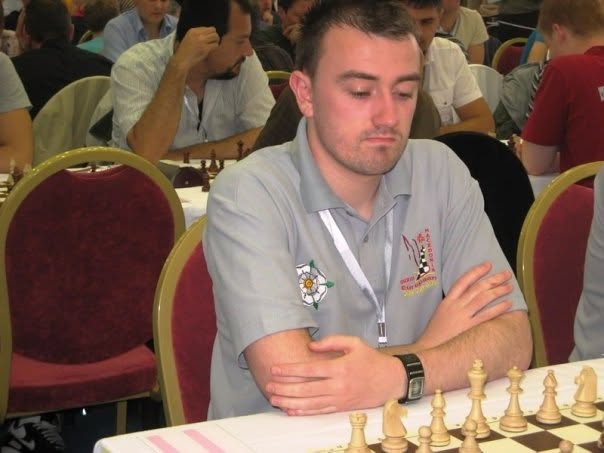
The year itself became a long sequence of airports, trains, tournament halls and cities I now half-remember. Every event ran to the same rhythm: arrive, register, prepare, play, analyse, repeat, then go and find the next train.
Tournament halls are strange places. Hundreds of people sitting in near silence, the occasional nervous lap of the room, and underneath it all the soft mechanical sound of clocks. Every so often you look up from a position you have been analysing for half an hour and notice the tactic you ought to have seen in the first thirty seconds.
Chess has a rare talent for making intelligent people feel briefly and completely stupid. I have come to think of that as one of its more useful features.
Some of my favourite games
One advantage of writing this up years later is that I can finally show a few without first delivering forty minutes of opening theory to an audience glazing over.
What I like about these now has nothing to do with the results. It is the shape of the thinking: the small positional decisions, the quiet accumulation of advantages, the fact that most of the important moves look completely unremarkable until several moves later, when they turn out to have been the whole game. If you want the machine's version of the same obsession, I wrote separately about the architecture of a chess engine, which spends its entire life deciding which moves not to bother looking at.
That pattern, it turns out, shows up well outside chess.
What chess taught me about engineering
The lessons that lasted had very little to do with chess and even less to do with winning.
Most improvement is boring
People love a breakthrough. Improvement is mostly repetition: thousands of tactics, hundreds of analysed games, endless review of the same ideas until they stop being ideas and become instinct. Engineering is no different. The best teams I have worked with were rarely sitting on a secret technique; they were just relentlessly, almost tediously good at the fundamentals.
Evaluation matters more than action
Strong players spend more time evaluating a position than searching for the move. It sounds obvious. It is not, because plenty of organisations do the exact opposite - moving quickly and decisively before anyone has agreed what the problem actually is. A correct diagnosis is usually worth more than a fast solution, and almost always cheaper.
Small advantages compound
Most games are not won by a brilliant sacrifice. They are won by stacking up small advantages until the position more or less plays itself: a better pawn structure, a slightly more active piece, a square the opponent can never quite cover. Organisations behave the same way. Good hiring, clear standards, decent tooling, delivery you can rely on; none of it is individually transformative, and all of it together is very hard to compete with.
Looking back
People occasionally ask whether walking away from technology for a year was a mistake. Financially it was probably suboptimal. On paper it certainly looked eccentric. I would do it again tomorrow without a second thought.
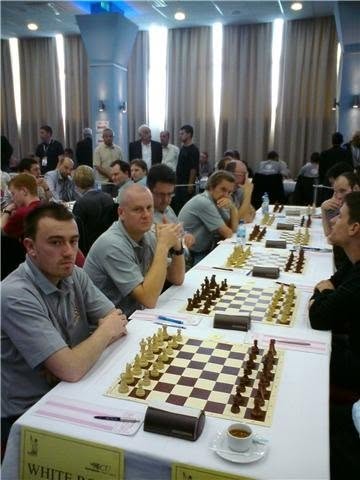
The year taught me more about learning, focus and performing under pressure than any job I have held before or since. It also left me with a useful reference point. Whenever a project starts to feel hard, I think back to spending four hours on rook endgames in a hotel room before travelling halfway across Europe to lose because I missed a tactic on move ten.
Perspective is a wonderful thing.
Final thoughts
Most careers are measured in promotions, titles and logos. Those things matter. But some of the experiences worth the most sit just outside that timeline, where they are hard to put on a CV without inviting questions.
For me, one of those was twelve months travelling the world to play chess. I did not become a grandmaster. I did not come home with a secret. What I learned was that mastery is far less glamorous than people want it to be: it is mostly turning up, studying carefully, and making slightly better decisions than you made the day before.
Further bragging reading
- Rising star of English chess shares spoils at Blackpool Open: the Telegraph being generous with the word "star".
- Hebden Bridge 2 v Matthew Webb 8: a simultaneous display I was invited to lead and that the one loss still haunts me.
Keep reading
New writing, now and then
Occasional notes on platform engineering, building dependable software and that constant buzz word we doom scroll past on LinkedIn! No cadence promised.